News
U.S. and Canada Race to Avoid New 50% Tariffs as Trade Tensions Escalate
The United States and Canada are engaged in last-minute negotiations as Washington prepares to impose new 50% tariffs on approximately $20 billion of Canadian goods, threatening to deepen an already strained economic relationship.
August 19, 2026
United States
0 views
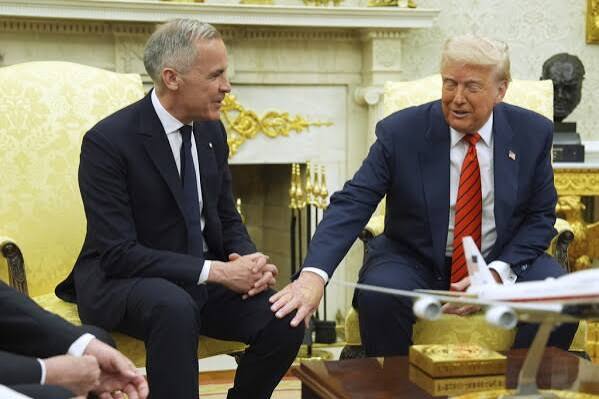
The deadline has triggered an intense round of last-minute negotiations between Washington and Ottawa. U.S. President Donald Trump and Canadian Prime Minister Mark Carney spoke again on August 18 as officials attempted to resolve remaining disagreements before the tariffs take effect. Despite several weeks of negotiations, the two sides remained apart on important issues. One of the central disputes concerns access to each country's markets. The United States has criticized Canada's protection of sectors such as dairy and has demanded greater access for American products. Canada, meanwhile, has been seeking relief from existing U.S. tariffs affecting industries including steel, aluminum, lumber and automobiles.
The automotive industry is particularly important because North American manufacturing depends heavily on integrated supply chains that cross the U.S., Canadian and Mexican borders. Automakers have warned that changes to the rules governing North American content could significantly increase production costs. U.S. automakers are lobbying against stricter proposed requirements that could add billions of dollars to their annual costs. The dispute is also taking place against the backdrop of negotiations over the USMCA, the trade agreement linking the United States, Canada and Mexico. The agreement has helped create highly integrated North American production networks, particularly in automobiles, agriculture, energy and manufacturing.
Canadian businesses are preparing for the possibility that the new tariffs will take effect. Industries that rely heavily on exports to the United States including lumber, wine and dairy could face increased costs, reduced competitiveness and potential job losses if the dispute continues. The economic impact may extend beyond Canada. Because Canadian and American economies are deeply connected, tariffs can increase costs for companies and consumers on both sides of the border. Businesses may respond by changing suppliers, moving production or increasing prices.
The dispute also has a broader geopolitical dimension. Canada and the United States are close allies and members of major security and economic institutions, making the deterioration of their trade relationship unusual. Ottawa has increasingly emphasized the importance of diversifying Canada's international trade relationships while maintaining its long-standing relationship with Washington. The immediate question is whether the two governments can reach a compromise before or after the August 19 deadline. Even if the tariffs are delayed or modified, the continuing uncertainty surrounding North American trade could influence investment decisions, manufacturing strategies and the future renegotiation of the USMCA. For North America, the dispute represents a broader shift toward a more protectionist global trading environment. The outcome of the negotiations could help determine whether the United States, Canada and Mexico move toward deeper economic integration or a more fragmented regional trading system.
About this discovery
Category
News
Continent
North America
Country
United States